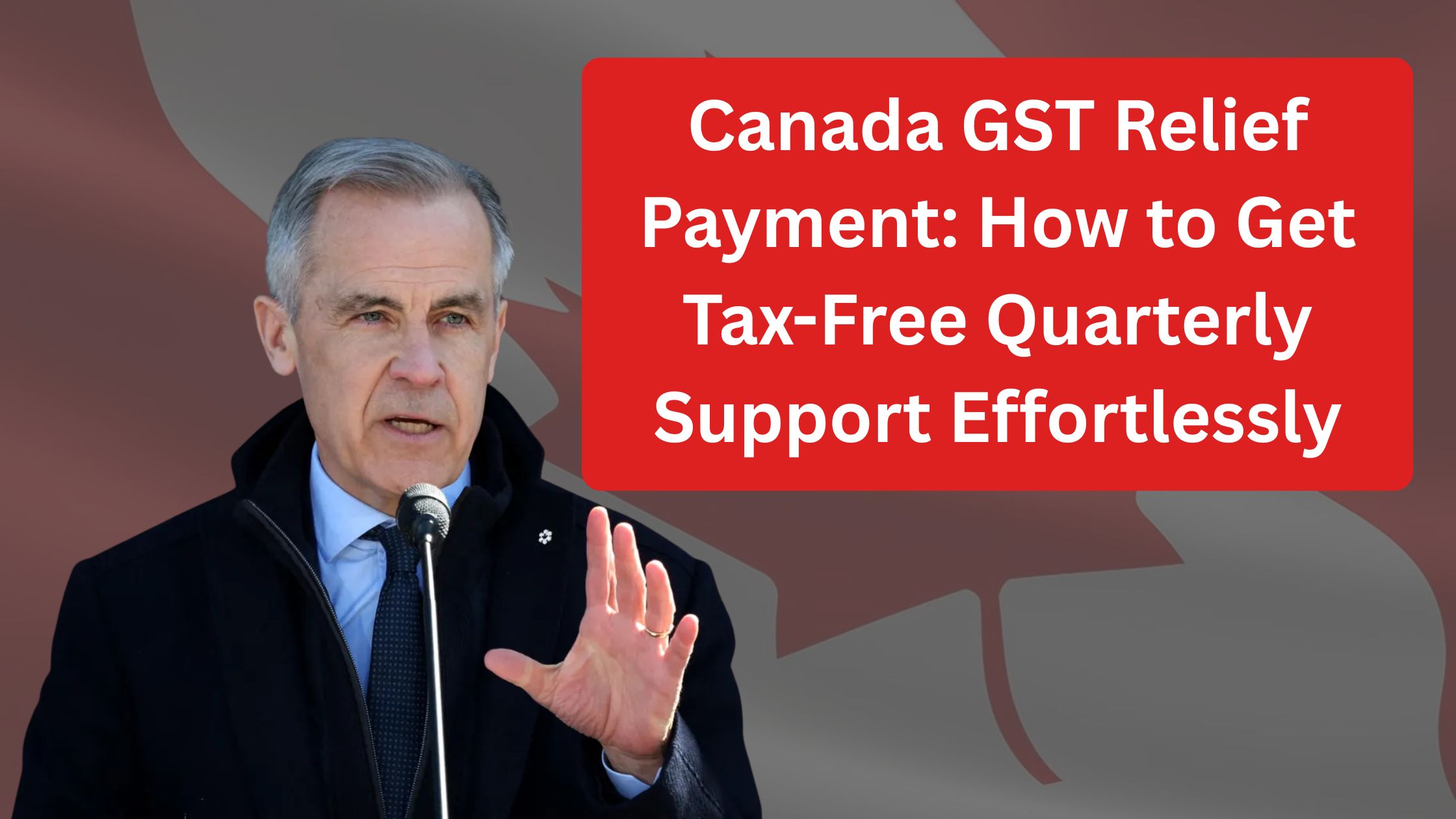
Canada’s tax system includes a range of relief measures designed to support its residents during challenging financial times. One such support mechanism is the Canada GST Relief Payment, a program aimed at easing the tax burden on eligible individuals and families across the country. This article offers an in-depth look at the GST relief payment, explaining what it is, who qualifies, how it works, and how Canadians can access this valuable support.
What is Canada GST Relief Payment?
The Canada GST Relief Payment refers to financial assistance provided by the Canadian government to help offset the cost of the Goods and Services Tax (GST) or Harmonized Sales Tax (HST) paid by individuals. These payments aim to reduce financial pressure, especially for people with low or moderate incomes, making everyday goods and services more affordable.
This initiative is part of the broader GST/HST Credit program, which delivers tax-free quarterly payments to eligible Canadians. The relief payment effectively acts like a rebate against the taxes paid, ensuring that GST/HST does not disproportionately affect those less able to afford it.
Who is Eligible for GST Relief?
Eligibility for the Canada GST Relief Payment is primarily determined by income level and family status. Here are the key eligibility criteria:
- Residents of Canada who have filed an income tax return in the previous year.
- Individuals or families with low or modest incomes.
- Canadian residents aged 19 or older.
- Families with children may receive additional amounts.
- Individuals must provide updated tax information annually to remain eligible.
This payment targets individuals and families who would benefit most from financial relief. Single parents, seniors, and low-income households are among the main beneficiaries.
How Does the GST Relief Payment Work?
The Canada GST Relief Payment works by providing quarterly payments to eligible recipients. These payments are calculated based on several factors:
- Income Level: The lower the income, the higher the GST credit amount eligible.
- Family Size: Additional credits are available for individuals with children.
- Marital Status: Couples may receive combined credits reflecting family income.
Payments are normally issued four times a year, typically in January, April, July, and October. The amounts can vary but generally range from a few hundred to over a thousand Canadian dollars annually, depending on individual circumstances.
How to Apply for the GST Relief Payment
Applying for the Canada GST Relief Payment is straightforward for most Canadians. Here’s a step-by-step process:
- File your annual income tax return with the Canada Revenue Agency (CRA). Eligibility for the GST credit is automatically assessed at this time.
- Ensure your personal information is accurate and up to date, including marital status and number of children.
- Once assessed, if eligible, the CRA will issue quarterly payments directly to your bank account or by cheque if no direct deposit is set up.
- If necessary, update your information with the CRA through their online portal or by contacting their support line.
No separate application specifically for the GST relief payment is typically required beyond filing your income taxes, making it accessible and easy to claim.
Benefits of the Canada GST Relief Payment
The GST Relief Payment provides important benefits for Canadian households:
- Financial Support: Helps offset GST/HST paid on essential goods and services.
- Income Support: Increases disposable income for low to moderate-income families.
- Tax-Free Support: The payments are non-taxable and do not affect eligibility for other government benefits.
- Quarterly Payments: Regular, predictable payments help with budgeting and managing everyday expenses.
This relief mechanism plays a key role in reducing the impact of federal sales taxes on Canadians who need it the most.
Important Related Terms and Concepts
To better understand the Canada GST Relief Payment, it’s helpful to know related terms and entities:
| Term | Description |
|---|---|
| GST (Goods and Services Tax) | A 5% federal sales tax levied on most goods and services in Canada. |
| HST (Harmonized Sales Tax) | A combined federal and provincial sales tax applied in certain provinces. |
| CRA (Canada Revenue Agency) | The federal agency responsible for tax collection and benefit payments. |
| GST/HST Credit Program | The program through which GST relief payments are distributed quarterly. |
| Net Income | Income used by the CRA to determine eligibility for the GST credit. |
Understanding these terms enhances clarity on how GST relief functions within the broader Canadian tax and social support framework.
What You Should Know About GST Relief and Taxes
- GST Relief Payments do not replace filing your income tax return; they complement your tax obligations.
- These payments are non-taxable; you do not need to report them as income.
- The payment amount can change yearly based on government budgets and policy decisions.
- Changes in your family status or income must be reported to CRA to ensure accurate payments.
- While GST relief mainly focuses on those with low to moderate incomes, high earners are typically not eligible.
Tips for Maximizing Your GST Relief Payment
- Always file your income tax return on time to avoid missing out on payments.
- Keep your personal and family information updated with CRA.
- Consider direct deposit for faster, safer receipt of payments.
- Use the CRA’s My Account online service to track your payment status and update details.
- If you have children, claim all eligible dependents to maximize the credit amount.
Frequently Asked Questions (FAQs)
1. How often are GST Relief Payments made?
They are issued quarterly—January, April, July, and October.
2. Can I receive GST Relief Payments if I am a senior?
Yes, seniors living in Canada with eligible income can receive payments.
3. Do I need to apply separately for the GST Relief Payment?
No, it is automatically credited after you file your income tax return.
4. Are GST Relief Payments taxable?
No, these payments are tax-free and do not affect other benefits.
5. What should I do if my family situation changes?
Notify CRA promptly to ensure your GST relief payments remain accurate.

Elizabeth Muenzen is an education writer and community researcher dedicated to covering school boards, local policy, and issues that impact students and families. With a strong focus on transparency and fact-based reporting, she breaks down complex topics into clear, accessible insights for parents, educators, and community members.